Real Estate
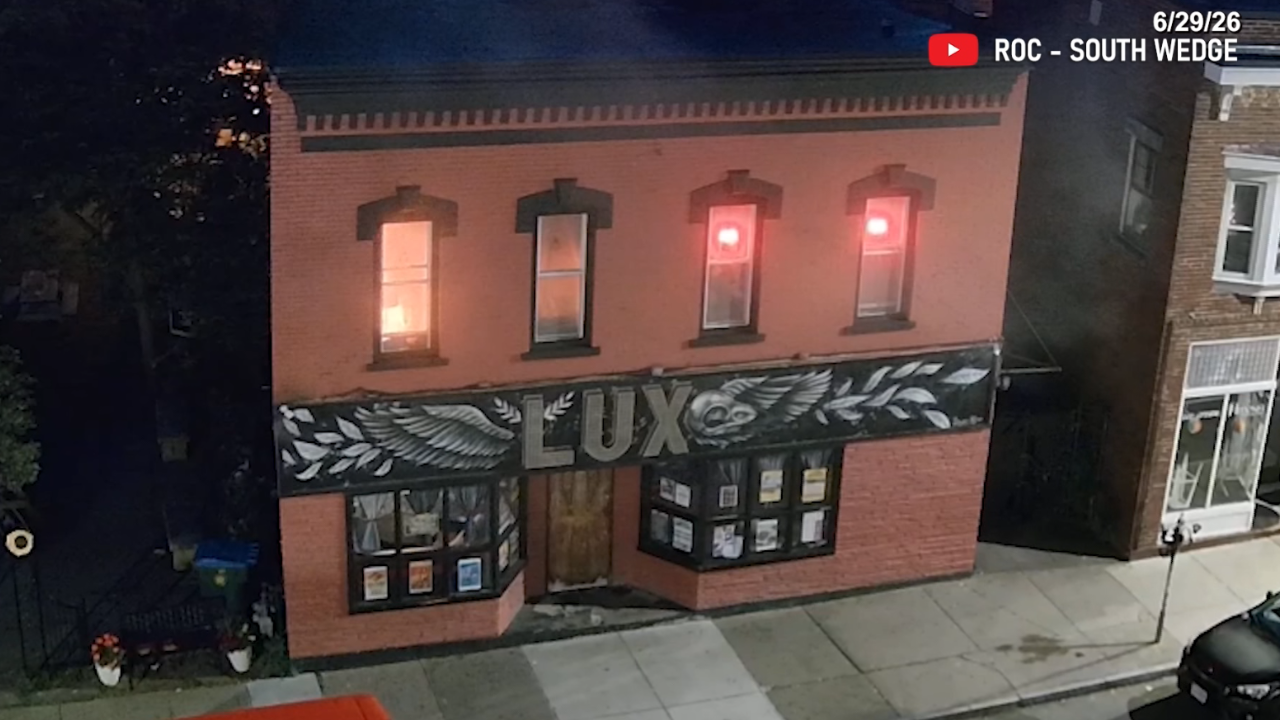
Lux Lounge continues to renovate after June fire causes local bar to close
By Lila Thompson
Advertisement · Why this ad?
Fatima holds a Bachelor's in Sociology and Communications from the University at Buffalo and has spent four years reporting on community issues for Rochester's grassroots publications. Her deep engagement with local neighborhoods informs her storytelling.
More from Fatima →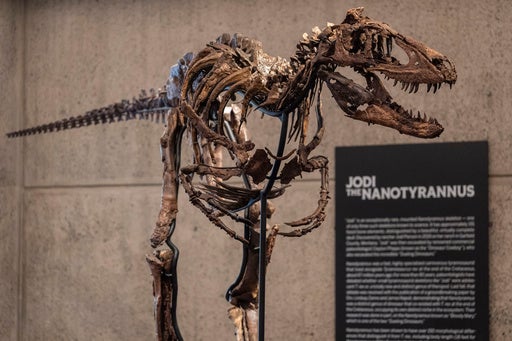
As the gavel came down at Sotheby’s, a wave of disbelief washed over the audience. A rare dinosaur skeleton, affectionately named "Jodi," had just fetched a staggering $47.3 million, making it one of the most expensive fossils ever sold. Among the bidders was a mystery buyer who outmaneuvered five other contenders in a thrilling 12-minute auction. This moment wasn't just about the price; it was a testament to humanity's enduring fascination with the prehistoric world.
The auction for Jodi, a American Museum of Natural History skeleton, took place on a Tuesday in New York City and was organized by Sotheby’s. Initially, experts anticipated the fossil would sell for between $6 million and $9 million. However, the final bid shattered expectations, solidifying Jodi's status as the second-most expensive dinosaur fossil ever sold, trailing only behind another auctioned T. rex known as "Gus," which went for $50.1 million earlier this summer.
Jodi is significant not only for its price tag but also for its scientific value. Recent studies confirm that the Nanotyrannus is not merely a juvenile T. rex, as was once believed, but a distinct species that roamed the Earth around 67 million years ago during the Cretaceous period. This adds a layer of complexity to our understanding of dinosaur evolution and the ecosystems they inhabited.
The excitement surrounding the auction reflects a broader cultural phenomenon; the allure of dinosaurs captivates people of all ages. Whether it’s children marveling at the size of these ancient creatures or adults reflecting on the mysteries of evolution, dinosaurs continue to spark curiosity and wonder.
Jodi’s skeleton measures approximately half the length of a full-grown T. rex, making it a fascinating specimen for paleontologists and dinosaur enthusiasts alike. Its discovery and subsequent sale highlight the ongoing interest in paleontology and the lengths to which collectors will go to own a piece of history. The fact that Jodi is a confirmed cousin of the T. rex adds to its appeal, as it helps bridge gaps in our understanding of these magnificent creatures.
The scientific community has long debated the classification of Nanotyrannus. The recent confirmation of its status as a separate species from T. rex is crucial for understanding the evolutionary lineage of carnivorous dinosaurs. This distinction not only enriches scientific knowledge but also informs conservation efforts for modern-day species by providing insights into survival and adaptation.
Moreover, the sale of Jodi raises questions about the ethics of fossil collection and ownership. While some argue that private ownership can lead to better preservation, others contend that significant fossils should remain in public institutions for educational purposes. The debate continues to evolve, with passionate voices on both sides advocating for the importance of these ancient remnants of life.
The excitement surrounding Jodi's sale ripples through communities, particularly those with strong ties to education and science. In Rochester, where education and community engagement are highly valued, the allure of such a significant fossil can encourage local interest in paleontology and the natural sciences. Institutions like the Rochester Museum & Science Center can utilize this buzz to inspire young minds and foster a love for science.
Local educators can leverage the story of Jodi to create engaging curricula that delve into the world of dinosaurs, evolution, and the importance of scientific inquiry. By connecting students with real-world examples of paleontological discoveries, they can cultivate a generation of thinkers who appreciate the wonders of our planet's history.
Furthermore, the sale of Jodi could potentially spark interest in local fossil hunting and geology. The Rochester area, rich in geological history, can serve as a backdrop for educational field trips and community events that celebrate both the past and the present. By fostering a sense of local pride in natural history, residents can develop a deeper appreciation for their environment and its rich tapestry of life.
Local paleontologist Dr. Sarah McKenzie, who has been involved in several fossil digs in the region, expressed her excitement about the auction. "This sale puts a spotlight on the importance of paleontology, not just as a scientific field, but as a way to connect our community with its history," she said. Her enthusiasm reflects a growing trend in Rochester, where educational initiatives are increasingly incorporating local geology and paleontology into their programs.
As the dust settles from the auction, the future of Jodi remains uncertain. The anonymous buyer now holds a piece of history, but questions linger about how this remarkable fossil will be displayed and utilized. Will it be featured in a private collection, or will it eventually find its way into a public museum for the enjoyment and education of the masses?
Experts hope that the new owner will consider the educational potential of Jodi. Displaying the skeleton in a public venue would not only honor its significance but also provide an opportunity for countless individuals to marvel at its grandeur. The impact of seeing such a specimen in person can ignite a passion for science and history that lasts a lifetime.
In the meantime, paleontologists and enthusiasts alike will continue to study the implications of Jodi's classification and its place in the dinosaur family tree. Ongoing research will likely yield new insights that further our understanding of these ancient creatures and their environments, ensuring that the legacy of Jodi extends far beyond its impressive auction price.
Jodi's remarkable journey from the ground to the auction block encapsulates the enduring human fascination with dinosaurs. This fascination is not merely about the bones; it's about the stories they tell and the connections they create within our communities. As we reflect on the significance of this sale, it becomes clear that Jodi is more than just a fossil; it's a bridge to the past, a source of inspiration for the future, and a reminder of the wonders that our world holds.
In a time when the importance of education and community engagement is paramount, stories like Jodi's serve as a beacon of hope. They remind us that through curiosity and commitment, we can uncover the mysteries of our world and foster a love for learning that transcends generations. As we look forward, let us embrace the legacy of Jodi and continue to inspire future explorers, scientists, and dreamers.
As the community of Rochester looks ahead, there is hope that Jodi’s story will not only enrich local educational programs but also enhance partnerships between schools and museums. Workshops, lectures, and interactive exhibits could emerge, transforming the fascination with Jodi into a vibrant educational movement that celebrates both the past and the scientific endeavors of today. The future of paleontology is bright, and with figures like Jodi leading the way, the potential for discovery and learning is boundless.
By Lila Thompson

By James McCarthy

By Julia Patterson

By Evelyn Rodriguez